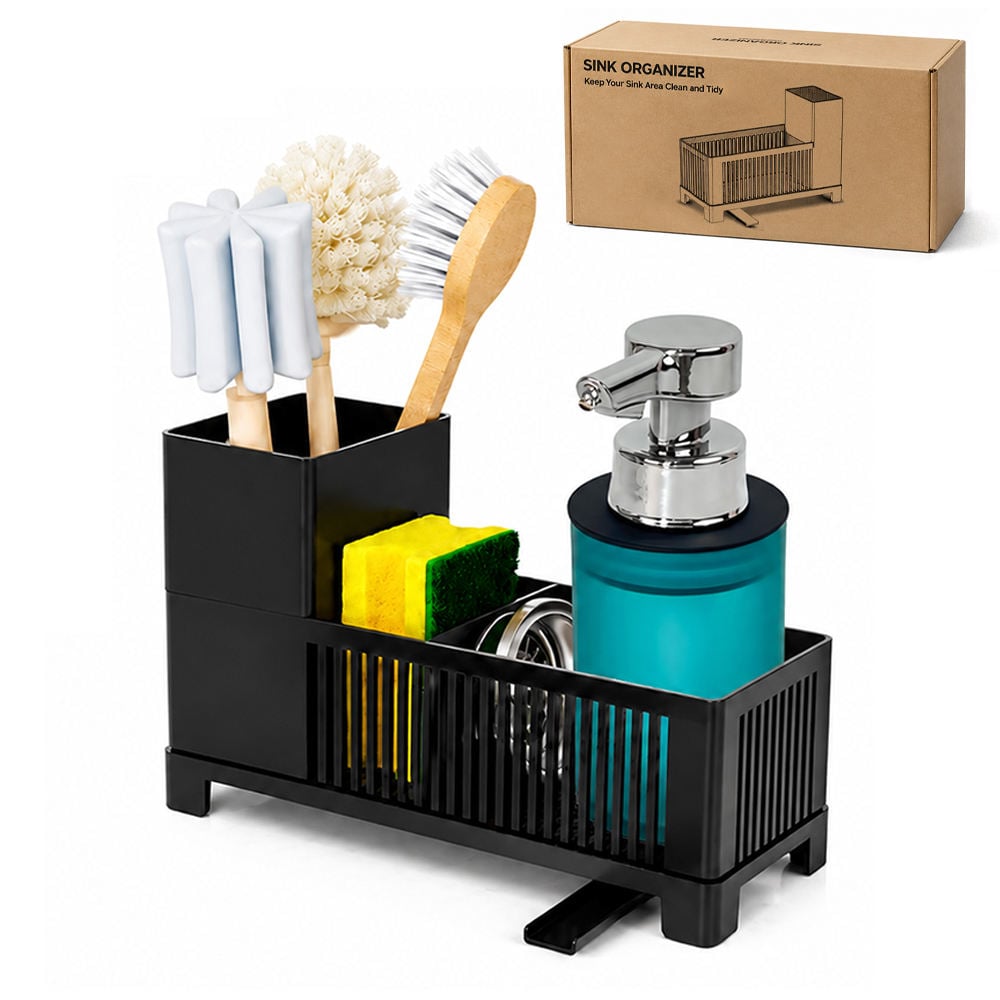
 W 2026 roku zorganizowany zestaw narzędzi do umywalki z podziałem na sekcje stał się jednym z najszybciej rozwijających się produktów w naszej ofercie przechowywania kuchennego i narzędzi do czyszczenia. W ramach wszystkich naszych kanałów sprzedaży – w tym wniosków o próbki, dyskusji B2B, projektów e-commerce, programów organizacji kuchni oraz zapytań OEM/ODM – ten wariant produktu wykazał wzrost o 75% w porównaniu do poprzedniego roku. Ta wartość odzwierciedla wzrost zaobserwowany w naszych własnych kanałach handlowych, a nie publiczną, rynkową statystykę. Powód popytu jest bardzo praktyczny: strefa umywalki to jedno z najbardziej intensywnie wykorzystywanych miejsc w kuchni, ale zarazem jedno z najłatwiejszych do stworzenia bałaganu.
Typowa strefa zlewu kuchennego może zawierać ściereczkę do naczyń, szczoteczkę do czyszczenia, gąbkę, gąbkę ze stali nierdzewnej, butelkę z płynem do mycia naczyń, dozownik do mydła do rąk, szczoteczkę do butelek, korek do zlewu oraz czasem małą raczkę lub narzędzie do czyszczenia odpływu. Gdy przedmioty te są umieszczane przypadkowo na blacie, tworzą bałagan, dłużej pozostają mokre i trudniej je znaleźć w razie potrzeby. Nasz organizator narzędzi do zlewu z podziałem na sekcje rozwiązuje ten codzienny problem, przypisując każdemu narzędziu osobną strefę: ściereczki mogą wisieć lub leżeć osobno, szczotki mogą stać pionowo, dozownik do mydła pozostaje stabilny, a gąbka ze stali nierdzewnej jest oddzielona od innych przedmiotów. Efektem jest bardziej elegancka strefa zlewu, szybszy dostęp do narzędzi oraz mniejszy bałagan na blacie.
Tło rynkowe wspiera ten kierunek rozwoju produktu. Zgodnie z raportem The Business Research Company rynek narzędzi i środków czyszczących do użytku domowego ma wzrosnąć z 19,77 mld USD w 2025 r. do 21,16 mld USD w 2026 r., co odpowiada średniorocznemu tempu wzrostu (CAGR) na poziomie 7,0%. Według danych Verified Market Research rynek produktów do organizacji przestrzeni domowej był warty 13,13 mld USD w 2024 r. i ma osiągnąć wartość 17,67 mld USD do 2032 r., rosnąc średniorocznie o 4,3% w okresie od 2026 do 2032 r. Te raporty pokazują, że konsumenci nie kupują wyłącznie narzędzi czyszczących – zakupują także systemy ułatwiające ich organizację, przechowywanie oraz bardziej efektywne wykorzystanie.
DLACZEGO STREFA ZLEWY WYMAGA ORGANIZATORA O DZIELONYCH PRZEDZIAŁACH
Zlewozmywak to strefa pracy, a nie tylko źródło wody. Ludzie myją w nim ręce, płuczą warzywa, czyszczą naczynia, odkurzają garnki, uzupełniają płyn do mycia, myją butelki oraz wycierają blaty wokół zlewozmywaka. Każda z tych czynności wymaga innego narzędzia. Problem polega na tym, że większość gospodarstw domowych nie posiada odpowiedniego systemu przechowywania tych narzędzi. Gąbka może leżeć obok mokrej ściereczki. Kulka ze stali szczytowej może dotykać dozownika mydła. Szczotka może leżeć płasko w wodzie. Butelka płynu do mycia naczyń może opierać się o kran. Powoduje to wrażenie wizualnego bałaganu i sprawia, że codzienne czyszczenie wydaje się bardziej nieuporządkowane.
Nasz organizator narzędzi z zlewu używa komórkowej struktury do oddzielenia narzędzi według funkcji. Słupka nie musi dotykać stali. Szczotka czyszcząca ma własny obszar stojący. Wydział mydła ma stabilną platformę. Gąbkę lub sprzątacz można umieścić w oddzielnej strefie odprowadzania wody. To oddzielenie jest ważne, ponieważ różne narzędzia mają różne poziomy wilgoci, tekstury i cele czyszczenia. Gdy wszystkie są połączone, zlew wygląda nieuporządkowanie, a użytkownik traci czas na poszukiwania, przenoszenie i przekształcanie.
Wartość jest prosta: wszystko czasem szuka, przenosi i przeplata.
ma miejsce. Kiedy użytkownik skończy zmywać naczynia, pędzel wraca do strefy pędzla. Skaz wraca do powieszonego lub otwartego obszaru. Stalowa wełna zostaje w swoim przedziale. Wydział mydła pozostaje w pozycji pionowej i łatwo się go odciska. Dzięki temu łatwiej jest utrzymać rutynę niż przechowywać ją w miejscu.
Włona stalowa, szatnia, szczotka, zapiekarka, dlaczego każdy przedmiot potrzebuje własnego obszaru
Ręcznik do naczyń potrzebuje przepływu powietrza. Jeśli jest złożony pod innymi narzędziami lub pozostawiony w mokrej kupie, dłużej pozostaje wilgotny i może wydzielać nieprzyjemny zapach. Szczotka do czyszczenia wymaga pionowego przechowywania, aby włosie mogło wyschnąć i było widoczne. Dozownik mydła potrzebuje płaskiej, stabilnej podstawy, by nie przewracał się ani nie wyciekał na blat. Worek stalowy lub metalowa gąbka do czyszczenia powinny być przechowywane osobno, ponieważ mogą gromadzić pozostałości, wilgoć i cząstki po intensywnym czyszczeniu.
Dlatego segregacja ma znaczenie. Chodzi nie tylko o wygląd, lecz o dopasowanie sposobu przechowywania do danego narzędzia. Strefa dla ręczników wspiera schnięcie. Gniazdo dla szczotki umożliwia pionowe przechowywanie. Obszar dla dozownika mydła zapewnia stabilność. Komora dla gąbki do czyszczenia zapewnia oddzielenie. Gdy te funkcje są połączone w jednym organizerze, obszar nad zlewem staje się łatwiejszy w obsłudze.
EPA wyjaśnia, że kluczem do kontroli pleśni jest kontrola wilgoci oraz że mokre lub wilgotne przedmioty należy szybko wysuszyć, najczęściej w ciągu 24–48 godzin, aby zapobiec rozwojowi pleśni. Nasz organizator nie jest urządzeniem zapobiegającym powstawaniu pleśni i nie powinien być tak reklamowany. Jednak dobrze zaprojektowany system odpływu i oddzielania może pomóc użytkownikom uniknąć pozostawiania mokrych narzędzi ułożonych na stosie, co sprzyja lepszej wentylacji i ogranicza ryzyko powstawania pleśni. codzienna obsługa kuchni. citeturn656471search2
DLACZEGO „ŁATWO WIDOCZNE, ŁATWO DO POBRANIA” TO RZECZYWISTY ARGUMENT SPRZEDAJĄCY
Wiele produktów do przechowywania zawodzi, ponieważ zbyt mocno ukrywa przedmioty lub utrudnia ich wyjęcie. Organizator do zlewu nie powinien tworzyć kolejnej warstwy niewygody. Powinien przyspieszać codzienne czynności. Gdy użytkownik chce szczotki, szczotka powinna być widoczna. Gdy potrzebuje ściereczki, powinna być łatwo dostępna. Gdy naciska dозownicę mydła, podstawa powinna pozostać stabilna. Gdy potrzebuje gąbki stalowej do garnka, nie powinien być zmuszony do przesuwania stosu mokrych narzędzi.
Nasze urządzenie zostało zaprojektowane z myślą o widoczności i łatwości dostępu. Podzielona układanka pozwala użytkownikowi od razu zobaczyć każde narzędzie. Dzięki temu proces czyszczenia staje się bardziej płynny. Nieporządek wokół zlewu powoduje drobne opóźnienia w ciągu dnia. Organizator podzielony na strefy eliminuje te opóźnienia. Użytkownik zawsze wie, gdzie znajduje się każdy przedmiot, korzysta z niego i odstawia go z powrotem na to samo miejsce. Z czasem taka rutyna sprawia, że kuchnia pozostaje spokojniejsza i lepiej uporządkowana.
Jest to szczególnie ważne w kuchniach rodzinnych, wspólnych mieszkaniach, wynajmowanych domach, biurach oraz małych restauracjach. Gdy kilka osób korzysta z tego samego zlewu, ich zwyczaje są różne. Jedna osoba może zostawić szczoteczkę przy kranie, a inna – gąbkę stalową obok butelki mydła. Organizator podzielony na oddzielne kompartmenty zapewnia całej rodzinie lub grupie współlokatorów wspólny system. Zmniejsza to liczby sporów, nieporozumień oraz konieczność wielokrotnego porządkowania.
ZWIĄZEK MIĘDZY CZYSZCZENIEM, MYDŁEM A ORGANIZACJĄ ZLEWU
CDC wyjaśnia, że czyszczenie polega na używaniu wody, mydła i szczotkowania, a jego zadaniem jest usuwanie brudu, zanieczyszczeń oraz wielu drobnoustrojów z powierzchni. CDC podkreśla również, że mycie rąk mydłem i wodą to ważna nawyka w kuchni podczas obsługi i przygotowywania żywności. Te punkty wyjaśniają, dlaczego mydło, szczotki, ściereczki oraz gąbki do czyszczenia muszą być łatwo dostępne w pobliżu zlewu. Jeśli te narzędzia są trudne do znalezienia lub nieprzyjemne w dotyku, ludzie citeturn794052search0turn794052search7
Nasz organizer do zlewu wspiera praktyczną stronę higieny, ułatwiając dostęp do narzędzi do czyszczenia oraz ich prawidłowe odłożenie po użyciu. Nie wykonuje on samoczynnie czyszczenia i nie zastępuje odpowiedniego mycia rąk, naczyń ani powierzchni. Jego wartość polega na utrzymaniu porządku wśród narzędzi, dzięki czemu użytkownicy mogą sprawniej przeprowadzać czyszczenie. Dozownik mydła jest gotowy do użycia. Szczotka stoi pionowo. Ściereczka jest oddzielona. Gąbka do czyszczenia nie ginie pod wilgotną gąbką. Ta niewielka poprawa czyni codzienną rutynę przy zlewie bardziej efektywną.
Dla kuchni to mocna wiadomość produktowa. Organizer nie jest tylko ozdobą – wspiera bezpośrednio przepływ pracy związany z myciem, płukaniem, suszeniem i przechowywaniem narzędzi. Dlatego nadaje się dla zakupujących do użytku domowego, marek sprzętu kuchennego, dostawców narzędzi do czyszczenia, zakupujących dla sektora hotelarskiego oraz sprzedawców na platformach e-commerce.
DLACZEGO MAŁE KUCHNIE POTRZEBUJĄ ORGANIZACJI OKOLICY ZLEWY JESZCZE WIĘCEJ
W dużej kuchni bałagan może się rozproszyć i mimo to wyglądać na kontrolowany. W małej kuchni mieszkalnej każdy przedmiot jest widoczny. Jedna mokra ściereczka, szczotka, gąbka, butelka mydła oraz metalowa gąbka do czyszczenia mogą sprawić, że cała strefa zlewu wyda się przepełniona. Dlatego kompaktowy organizer jest tak cenny – łączy wiele luźnych przedmiotów w jedną, dobrze skontrolowaną powierzchnię.
Podzielna stacja do przechowywania narzędzi nad zlewką sprawia, że małe kuchnie wydają się przestronniejsze, ponieważ redukuje wrażenie wzburzenia wizualnego. Zamiast pięciu przedmiotów rozrzuconych po blacie użytkownik widzi jeden organizator z wyraźnie określonymi strefami. Jest to szczególnie przydatne w mieszkaniach wynajmowanych, kuchniach w akademikach, studio, małych mieszkaniach miejskich oraz w pomieszczeniach współdzielonych. Użytkownik nie musi montować półek, wiercić otworów ani modyfikować szafek. Wystarczy po prostu postawić organizator obok zlewu i od razu zacząć go używać.
Sprawia to również, że produkt jest atrakcyjny dla właścicieli nieruchomości, gospodarzy krótkoterminowych wynajmów, dostawców wyposażenia dla akademików oraz zarządzających nieruchomościami. Uprzątnięta strefa zlewu poprawia pierwsze wrażenie z kuchni. Na zdjęciach wynajmowanych mieszkań, treściach e-commerce oraz w rzeczywistym doświadczeniu gości porządny blat przekazuje wrażenie troski. Podzielny organizator nad zlewem to niskobudżetowy produkt o wysokim wpływie wizualnym.
DLACZEGO TEN PRODUKT DOSKONALE PASUJE DO TRENDÓW ORGANIZACJI DOMU
Organizacja przestrzeni domowej zmierza ku praktycznym systemom zamiast przypadkowemu przechowywaniu. Raport Better Homes & Gardens na temat trendów w zakresie przechowywania na 2026 rok podkreśla funkcjonalne, elastyczne i łatwe w utrzymaniu systemy organizacyjne, w tym proste rozwiązania ułatwiające codzienne rutyny. Choć jest to źródło medialne dotyczące życia domowego, a nie organ regulacyjny, odzwierciedla rzeczywisty kierunek preferencji konsumentów: ludzie chcą systemów przechowywania dostosowanych do codziennego zachowania, nie tylko na zaplanowanym zdjęciu. citeturn656471news37
Nasz organizer do umywalki odpowiada temu kierunkowi, ponieważ wspiera codzienną rutynę. Nie jest on pojemnikiem do przechowywania ukrywającym wszystko. Jest otwartą, widoczną i funkcjonalną stacją kuchenną. Użytkownik może zobaczyć narzędzia, szybko je chwycić i łatwo odłożyć z powrotem. Produkt redukuje bałagan, nie utrudniając przy tym dostępu. To właśnie taka równowaga sprawia, że dobrze sprawdza się w sprzedaży dla gospodarstw domowych, najemców, biur oraz sektora hotelarskiego.
Dla marek jest to przydatny kąt pozycjonowania. Nie sprzedawaj tego wyłącznie jako «stojak». Sprzedawaj jako organizator procesu mycia naczyń w zlewie. Tworzy strefy, zmniejsza bałagan na blachach, poprawia widoczność narzędzi, wspiera odpływ wody i czyni mycie naczyń bardziej wydajnym.
PROJEKTOWANIE SYSTEMU ODPOWIEDZIALNEGO ZA ODPIŁY: DLACZEGO OBSŁUGA WODY MA ZNACZENIE
Dobry organizator do zlewu musi uwzględniać wodę. Narzędzia do czyszczenia są często mokre po użyciu. Jeśli organizator nie ma logicznego systemu odpływu wody, może stać się kolejnym pojemnikiem na wilgoć – co przekreśla jego główną funkcję. Nasz produkt można zaprojektować z otwartymi szczelinami, podniesioną podstawą, kanałami odpływowymi, wyjmowanymi tackami, nachylonymi powierzchniami odpływowymi lub odłączanymi częściami do czyszczenia – w zależności od wersji OEM/ODM. Te szczegóły pomagają wodzie opuszczać obszar narzędzi zamiast gromadzić się wokół ściereczek, szczytników i gąbek.
Drenaż poprawia również satysfakcję użytkownika. Kupujący może nie zauważyć systemu odpływowego w pierwszym dniu, ale po dwóch tygodniach odczuje różnicę. Jeśli w organizerze gromadzi się woda, produkt staje się nieprzyjemny w użyciu. Jeśli organizer łatwo przepłukać i wysuszyć, użytkownik ma do niego większe zaufanie. Dlatego szczegóły projektowe mają znaczenie w produktach do przechowywania na kuchni.
W projektach B2B możemy dostosować drenaż w zależności od docelowej dystrybucji. Wersja budżetowa przeznaczona na platformy handlowe może korzystać z prostego projektu z otwartym dnem. Wersja premium dla sprzedaży detalicznej może zawierać wyjmowaną tackę. Wersja przeznaczona na hotele lub apartamenty może podkreślać łatwe czyszczenie oraz oddzielanie narzędzi. Wersja z dispenserem do mydła może obejmować stabilną strefę pompki oraz boczne przedziały na szczotki i ściereczki.
ZGODNOŚĆ Z DISPENSEREM DO MYDŁA: OD POJEDYNCZEGO PRODUKTU DO PEŁNEJ STACJI UMYWALNIOWEJ
Jedną z głównych zalet tego produktu jest możliwość przechowywania dozownika mydła wraz z narzędziami do czyszczenia. W wielu gospodarstwach domowych dozownik do mydła do naczyń lub butelka z mydłem do rąk znajduje się już w pobliżu zlewu. Jeśli dozownik jest oddzielony od szczotki i ściereczki, blat staje się zbyt zestawiony. Jeśli organizator zawiera stabilną strefę na dozownik, obszar wokół zlewu staje się bardziej spójny.
Jest to szczególnie cenne dla marek, które już sprzedają dozowniki mydła, uchwyty na gąbki, szczotki do naczyń lub ściereczki do czyszczenia. Organizator może stać się podstawą pełnej linii produktów do stacji przy zlewie. Klienci mogą kupić stojak osobno, stojak z dozownikiem mydła, stojak ze szczotką, stojak z zestawem ściereczek lub kompletny zestaw do czyszczenia kuchennego zlewu. Dzięki temu rośnie średnia wartość zamówienia i sprzedawcy mają więcej opcji pakowania.
Dla klientów OEM/ODM możemy dostosować obszar dozownika zgodnie z rozmiarem butelki, wysokością pompki, równowagą masy oraz wymaganiami dotyczącymi opakowania. Niektórzy zakupujący woleliby dozownik ręczny do mydła. Inni mogą potrzebować miejsca na dozownik automatyczny. Jeszcze inni mogą preferować uniwersalną otwartą platformę. Dostosowanie sprawia, że produkt staje się bardziej przystosowany do różnych rynków.
DLACZEGO WYTRZĄSKI ZE STALI I SZCZOTKI DO CZYSZCZENIA MUSZĄ BYĆ PRZECHOWYWANE ODDZIELNIE
Wytrząski ze stali, metalowe szczotki do czyszczenia oraz ciężkie kule do czyszczenia są przydatne przy trudnym czyszczeniu kuchni, ale nie należy ich przypadkowo mieszać z miękkimi ściereczkami, szczoteczkami ani butelkami z mydłem. Mogą one gromadzić resztki żywności, olej oraz drobinki metalu. Jeśli pozostaną wilgotne obok innych narzędzi, mogą spowodować bałagan i zabarwić pobliskie powierzchnie – w zależności od materiału oraz warunków użytkowania.
Oddzielna strefa do czyszczenia rozwiązuje ten problem. Użytkownik może umieścić gąbkę stalową w zamkniętej przestrzeni, gdzie nie styka się ona z ściereczką ani dozownikiem mydła. To drobny szczegół, ale ma znaczenie w codziennym użytkowaniu. Klienci doceniają produkty, które przewidują rzeczywiste bałagan w kuchni. Organizator z podziałem na strefy świadczy o tym, że produkt został zaprojektowany przez osoby znające kuchnię, a nie przez kogoś, kto po prostu narysował ogólny tackę do przechowywania.
Ta funkcja powinna być podkreślona na zdjęciach produktu. Pokaż ściereczkę w jednej strefie, szczotkę w drugiej, dozownik mydła w trzeciej i gąbkę stalową w czwartej. Klient od razu zrozumie korzyść.
DLACZEGO TEN PRODUKT DZIAŁA W E-COMMERCE
Raport DHL na temat trendów w e-commerce na 2026 rok objął ankietą 29 000 zakupujących online oraz 5800 firm e-commerce z 29 krajów. W handlu internetowym produkty, które potrafią przekazać swoją wartość za pomocą obrazów i krótkich filmów, mają wyraźną przewagę. Organizer do umywalki z podziałem na sekcje jest bardzo wizualny: pokazuje się najpierw nieporządek w umywalce, a następnie narzędzia umieszczane osobno w poszczególnych strefach. countertop after. citeturn656471search3
Ten produkt dobrze sprzedaje się na Amazonie, TikTok Shop, AliExpress, Shopee, Lazada, Shopify, Walmart Marketplace, w sklepach z artykułami kuchennymi, sklepach z produktami do porządkowania domu oraz w kanałach sprzedaży narzędzi do czyszczenia. Na głównym zdjęciu można przedstawić cztery kluczowe elementy: ściereczkę, szczoteczkę do czyszczenia, dozownik mydła oraz gąbkę stalową. Drugie zdjęcie może ilustrować odpływ wody. Trzecie zdjęcie może pokazywać wymiary produktu. Czwarte zdjęcie może prezentować stan powierzchni blatu przed i po użyciu produktu. Piąte zdjęcie może przedstawiać opcje kolorystyczne OEM oraz propozycje zestawów.
Produkt obsługuje również krótkie filmy wideo. Sprzedawca może pokazać problem w trzech sekundach: bałagan wokół zlewu. Następnie pokazać, jak organizer porządkuje wszystko w przejrzysty sposób. Konsument nie potrzebuje skomplikowanego wyjaśnienia. Wartość jest widoczna.
HANDLOWANIE NA ŻYWO: PRODUKT, KTÓRY SAM SIĘ PREZENTUJE
McKinsey donosi, że handlowanie na żywo może osiągać wskaźniki konwersji nawet dziesięć razy wyższe niż tradycyjna sprzedaż e-commerce w niektórych kontekstach. Jest to istotne, ponieważ organizer do zlewu to produkt idealny do prezentacji. Prezenter może umieścić na blacie przypadkowo wilgotną ściereczkę, szczoteczkę, dozownik mydła i gąbkę stalową, a następnie uporządkować je w stojaku. doświadczenie jest natychmiastowe. citeturn794052search1
Dobra demonstracja sprzedaży na żywo może przyjąć prostą strukturę: pokazanie bałaganu, zidentyfikowanie każdego narzędzia, umieszczenie każdego przedmiotu w osobnej strefie, naciśnięcie dozownika mydła, usunięcie szczotki, zawieszenie lub ułożenie ściereczki, pokazanie odpływu oraz pokazanie gotowego blatu. Następnie wyjaśnienie opcji OEM/ODM: kolory, materiały, rozmiary, wyjmowany tacka, logo, opakowanie, zestawy kompletne oraz marka własna.
To rodzaj produktu, który korzysta z wizualnych dowodów. Historia „przed i po” nie jest abstrakcyjna. Widzowie widzą, jak blat staje się bardziej uporządkowany.
INTERCLEAN 2026 I PRAKTYCZNE NARZĘDZIA DO CZYSZCZENIA
Raport o trendach INTERCLEAN 2026 podkreśla praktyczne podejście do profesjonalnego czyszczenia i higieny, zauważając, że innowacje odnoszą sukces, gdy działają w codziennych operacjach. Jest to istotne dla naszego produktu, ponieważ nie jest on ozdobnym gadżetem. To narzędzie operacyjne przeznaczone do obszaru zlewu kuchennego. Pomaga przechowywać narzędzia do czyszczenia tam, gdzie są potrzebne, utrzymuje kategorie bardziej efektywne. citeturn794052search6
Dla środowisk profesjonalnych lub półprofesjonalnych, takich jak małe kawiarnie, kuchnie biurowe, kuchenniczki w hotelach, mieszkania wynajmowane, zestawy wyposażenia dla firm sprzątających oraz pokoje hotelowe, podzielony organizer zapewnia spójność. Personel wie, gdzie należy umieścić narzędzia. Goście widzą czystszy obszar zlewu. Zarządca nieruchomości zmniejsza przypadkowy bałagan na blachach. Dzięki temu produkt nadaje się nie tylko do użytku domowego, ale także do kanałów B2B.
DOSTOSOWANIE OEM: ZAMIEŃ STOJAK DO ZLEWU NA PRODUKT Z LOGOTYPEM
Nasza firma oferuje pełną personalizację OEM podzielonych organizerów do zlewów. Możemy dostosować rozmiar, liczbę komórek, projekt odpływu wody, materiał, kolor, fakturę, wyjmowany tackę, miejsce na szczotkę, uchwyt na ściereczkę, obszar na dozownik mydła, strefę na gąbkę stalową, podstawę przeciwwślizgową, logo, etykietę, kod kreskowy, opakowanie detaliczne, opakowanie e-commerce, kartę instrukcji, wielojęzyczne opakowanie oraz konfigurację zestawów.
Różne kanały wymagają różnych wersji. Dla Amazona ważny jest przejrzysty, oparty na zdjęciach projekt z podaniem rozmiaru oraz scen zastosowania. Dla TikTok Shop klip przed i po powinien pokazywać szybką organizację. W przypadku supermarketów opakowanie musi wyjaśniać korzyść w ciągu kilku sekund: „oddzielne przechowywanie”, „do tkaniny, szczotki, dozownika i gąbki”, „utrzymuje obszar zlewu porządkowy”. Dla hoteli i apartamentów preferowana może być bardziej wytrzymałą i łatwą w czyszczeniu wersję. Dla premium marek artykułów domowych coraz większą wagę przybierają kolor, wykończenie, odczucie materiału oraz jakość opakowania.
OEM pomaga klientom uniknąć produktów typowych. Prosta siatka do zlewu może stać się gotowym do wprowadzenia na rynek rozwiązaniem do organizacji kuchni.
ROZWÓJ ODM: TWORZENIE PEŁNEJ LINII PRZECHOWYWANIA DLA ZLEWU KUCHENNEGO
Dzięki usłudze ODM możemy wyjść poza jeden organizator. Możemy opracować pełny system przechowywania nad zlewką: kompaktową wersję na małe mieszkania, większą wersję dla rodzin, model z przestrzenią pod dozownik mydła, wersję z wymienną tacką odpływową, wersję opartą o ścianę, wersję do umieszczenia na blacie, wersję przylegającą do krawędzi zlewozmywaka, wersję przeznaczoną na gąbkę i szczotkę, wersję z uchwytami na ściereczki lub kompletny zestaw zawierający szczotkę, ściereczkę, dozownik mydła, gąbkę stalową i organizator.
Każda wersja może być skierowana do innego klienta. Małe mieszkania wymagają kompaktowych rozmiarów. Kuchnie rodzinne potrzebują większej pojemności. Mieszkania wynajmowane wymagają łatwego czyszczenia. Hotele potrzebują jednolitego wyglądu. Sprzedawcy e-commerce potrzebują atrakcyjnych wizualnie produktów. Supermarkety potrzebują przejrzystej opakowania. Premium marki domowe potrzebują estetycznego projektu. Usługa ODM umożliwia dopasowanie produktu do rynku zamiast narzucania jednego uniwersalnego projektu we wszystkich kanałach.
KONTROLA JAKOŚCI: STABILNOŚĆ, ODWODNIENIE, WYKOŃCZENIE POWIERZCHNI I OPAKOWANIE
Kontrola jakości jest kluczowa dla organizerów do umywalki. Jeśli podstawa jest niestabilna, dozownik mydła przewraca się. Jeśli tacka odpływowa jest trudna w czyszczeniu, woda się w niej gromadzi. Jeśli komory są zbyt małe, narzędzia nie mieszczą się w nich. Jeśli materiał wydaje się tanio, klienci pozostawiają negatywne opinie. Jeśli krawędzie są nierówne, użytkownicy obawiają się zadrapań. Jeśli opakowanie jest słabe, produkt może dotrzeć zdeformowany.
Kontrolujemy dobór materiału, stabilność konstrukcji, wymiary komór, wydajność odpływu, dopasowanie tacy, wykończenie powierzchni, gładkość krawędzi, podstawę zapobiegającą poślizgowi, spójność koloru, jakość logotypu, wytrzymałość opakowania, umiejscowienie kodu kreskowego, przejrzystość instrukcji oraz spójność partii produkcyjnych. Dla zakupujących B2B jedno dobre próbka nie wystarcza. Każda partia produkcyjna musi być zgodna z zaakceptowaną próbką. Stabilna jakość chroni oceny na platformach handlowych, zapewnia powtarzalne zamówienia oraz reputację marki.
JAK KONSUMENCI POWINNI KORZYSTAĆ Z TEGO PRODUKTU
Dobrze zaprojektowany organizer do zlewu wymaga również jasnych instrukcji użytkowania. Użytkownicy powinni przepłukać mokre narzędzia przed ich umieszczeniem w organizerze, unikać pozostawiania grubej warstwy resztek pokarmowych w komórkach, regularnie opróżniać i przepływać tackę (jeśli model ją zawiera), oddzielnie umieszczać gąbkę stalową, pozostawiać ściereczki do wyschnięcia w pozycji otwartej oraz czyścić sam organizer podczas rutynowej czystki kuchni. Jeśli organizer posiada przestrzeń przeznaczoną na dozownik mydła, użytkownicy powinni sprawdzić, czy rozmiar butelki jest zgodny z uchwytem oraz czy pompka jest stabilna przed pierwszym użyciem.
Te instrukcje są proste, ale istotne. Produkt do przechowywania osiąga najlepsze wyniki, gdy użytkownicy dbają o jego konserwację. Organizer redukuje bałagan, ale nie powinien stać się ukrytą wilgotną pojemnością. Jasne instrukcje zwiększają satysfakcję klientów i zmniejszają liczbę skarg.
Dlaczego zakupujący powinni wprowadzić ten produkt na rynek w 2026 roku
Sygnał wzrostu o 75% w naszych kanałach wewnętrznych pokazuje, że nabywcy bardzo pozytywnie reagują na zorganizowane przechowywanie w zlewkach. The Business Research Company wspiera rozwój narzędzi do czyszczenia domowego, podczas gdy Verified Market Research wspiera ekspansję produktów do organizacji przestrzeni domowej. CDC podkreśla znaczenie łatwych w dostępie rutyn czyszczenia opartych na wodzie, mydle i tarciu. EPA podkreśla znaczenie kontroli wilgotności. DHL i McKinsey wyjaśniają, dlaczego produkty, które można łatwo zademonstrować wizualnie, osiągają silne wyniki w sprzedaży online. Interclean podkreśla praktyczne narzędzia skuteczne w codziennych rutynach.
Nasz zorganizowany zestaw do umywalki z podzielonymi przestrzeniami łączy w sobie wszystkie te trendy: przechowywanie w oddzielnych sekcjach, łatwy dostęp, rozdzielenie narzędzi, zaprojektowanie z myślą o odpływie wody, bardziej elegancki wygląd blatu, kompatybilność z dozownikiem mydła, oddzielne miejsce na gąbkę stalową, wartość dla małych kuchni, zastosowanie B2B oraz silne możliwości prezentacji w e-commerce oraz pełna personalizacja OEM/ODM. W 2026 roku konsumenci kupują nie tylko stojak – kupują usprawniony proces pracy przy umywalce, bardziej uporządkowaną kuchnię oraz codzienną rutynę, która łatwiej się utrzymuje. Dokładnie tę wartość nasz produkt oferuje.
 EN
EN
